
Where We Work
Deschutes National Forest
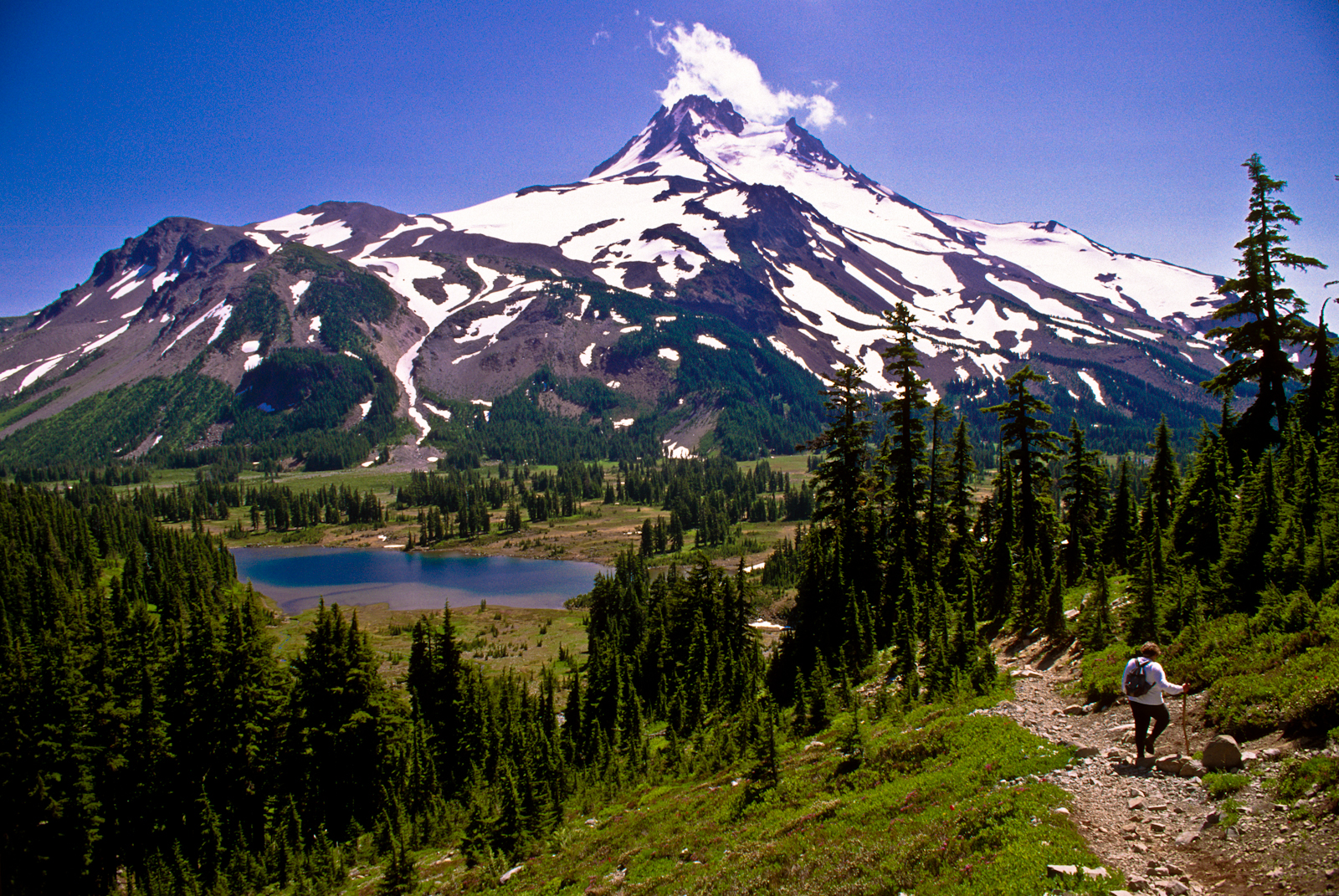
The Deschutes National Forest encompasses 1.6 million acres ranging from the Cascade Mountains to the high desert. The Forest is one of 19 national forests in the Pacific Northwest Region. The Forest lands fall into Deschutes, Jefferson, Klamath and Lake Counties and has four wilderness areas as well as the Newberry National Volcanic Monument.
The Deschutes has 94 family campgrounds, six group campgrounds, and other recreation sites. In addition, there are 13 resorts, marinas and stores, and a large number of summer homes. Attractions including 215 lakes and reservoirs, 617 miles of streams provide fishing and boating, winter sports, and thousands of acres of magnificent scenery. Current recreation use places the Deschutes among the top five forests in the nation as a place to visit.
Mt. Bachelor ski area is located on the National Forest 20 miles west of Bend. The ski area serves nearly a million people who recreate here each winter. Facilities are provided for both downhill and cross country skiing. Throughout the Deschutes there are a number of trails marked for snowmobiling and cross country skiing.
Ochoco National Forest
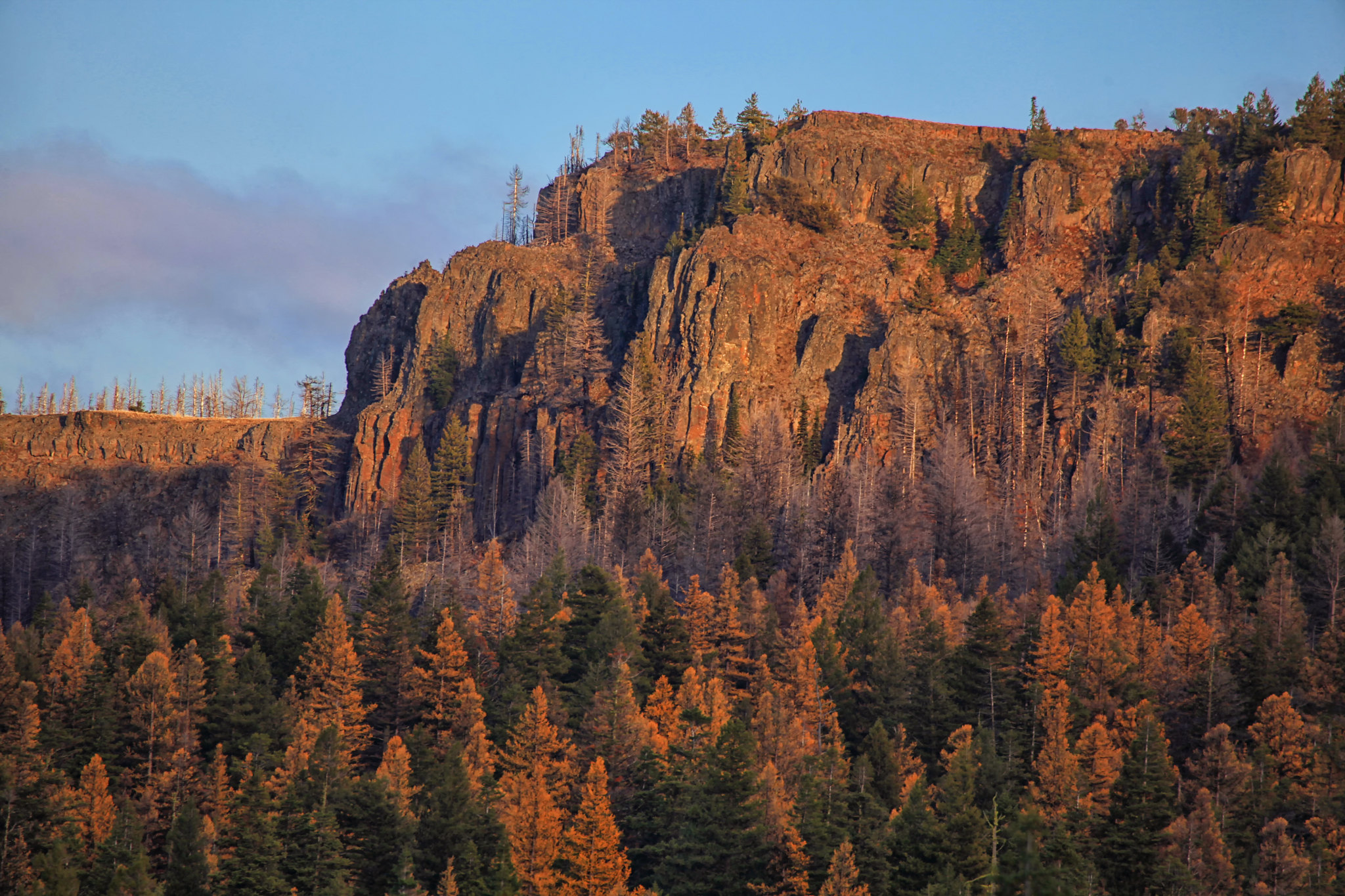
Located near the geographic center of Oregon, the Ochoco National Forest consists of 845,498 acres of land divided into three ranger districts: the Lookout Mountain Ranger District, the Paulina Ranger District, and the Snow Mountain Ranger District (currently administered by Malheur National Forest). The Forest is headquartered in Prineville, Oregon.
The Forest administers land in the Maury and Ochoco Mountains, which are southward extensions of the Blue Mountains physiographic province. Most of the Forest is drained by the Crooked and Deschutes Rivers. Part of the north slope of the Ochoco Mountains drains into the John Day River.
Vegetative types found on the Forest are diverse. Lower elevations that receive less than 10 inches of precipitation annually are vegetated with juniper, sagebrush, and grasses. Higher up, stands of ponderosa pine dominate southern and western aspects and compose the largest single forest type found on the Forest. Mixed conifer stands, made up of Douglas-fir, ponderosa pine, white fir, and western larch, grow at higher elevations on the cooler northern and eastern aspects. Scattered stands of lodgepole pine cover less than one percent of the Forest.
There are more than 375 different species of reptiles, amphibians, birds, and mammals known or expected to inhabit the Forest; 15 species of game fish, and numerous nongame fish species are in the area’s reservoirs, lakes, and streams. Deer, elk, and antelope are big game animals hunted on the Forest. Anadromous (steelhead) fish spawning occurs in some streams.
Habitat is know or expected to exist for other species classified by state and federal wildlife agencies as endangered, threatened, or sensitive, such as the peregrine falcon, Swainson’s hawk, bald eagle, western sage grouse, greater sandhill crane, long-billed curlew, common loon, Malheur spotted sculpin, wolverine, and redband trout.
The Forest also contains three Congressionally-designated wildernesses, the North Fork Crooked Wild and Scenic River, and portions of Wildcat Caldera and other geological remnant rock formations.
Crooked River National Grassland
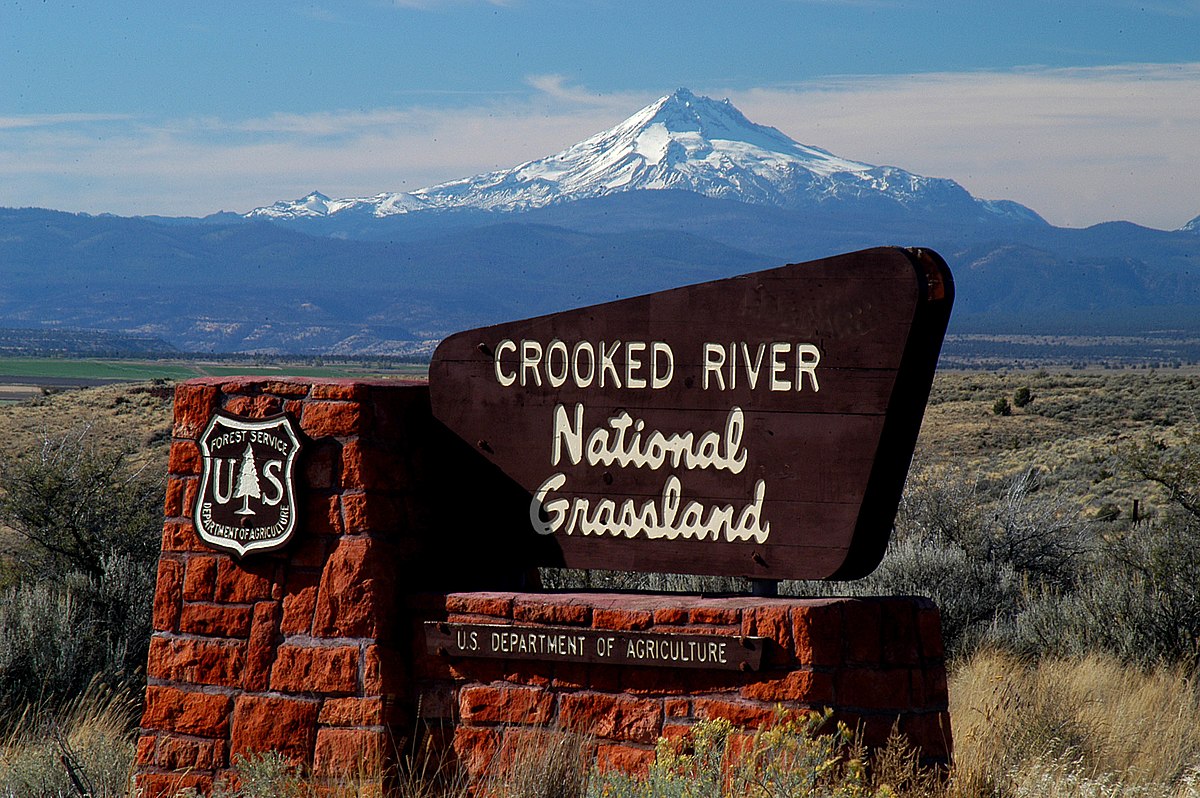
The Crooked River National Grassland is located in central Oregon, entirely within Jefferson County. Of 173, 629 acres encompassed by the Grassland boundary, 111,379 acres are under Forest Service administration. Other lands are privately owned or under the administration of the BLM, State of Oregon, or Jefferson County.
The Grassland is traversed from north to south by State Highways 26 and 97. West of Highway 97, the country is a high plateau interrupted by steep canyons of the Deschutes River and its tributaries. East of Highway 97, the terrain is rolling hills and buttes. Elevations range from 2,241 feet at Madras to 5,108 feet atop Gray Butte. Steep canyons border the major drainages, including the Deschutes and Crooked Rivers, and Squaw and Willow Creeks.
The Grassland lies within two subbasins of the Deschutes River drainage system: the Middle Deschutes River and the Lower Crooked River.
It is believed that the Grassland was originally vegetated with bluebunch wheatgrass and Idaho fescue, and some sagebrush, rabbitbrush, bitterbrush, and juniper. Because much of the area was cultivated and the native vegetation removed during the homesteading era, it is difficult to determine the original vegetation patterns.
The climate of the Grassland is typical for central Oregon. Annual precipitation averages 10.5 inches, but higher elevations may receive 19 inches or more per year. High intensity rain storms are likely to occur during spring and summer months. The growing season averages 100 days. Temperatures are moderate throughout the year and may fluctuate greatly between day and night. Frost may occur any day of the year.